

Axolotl fact sheet (free printable)
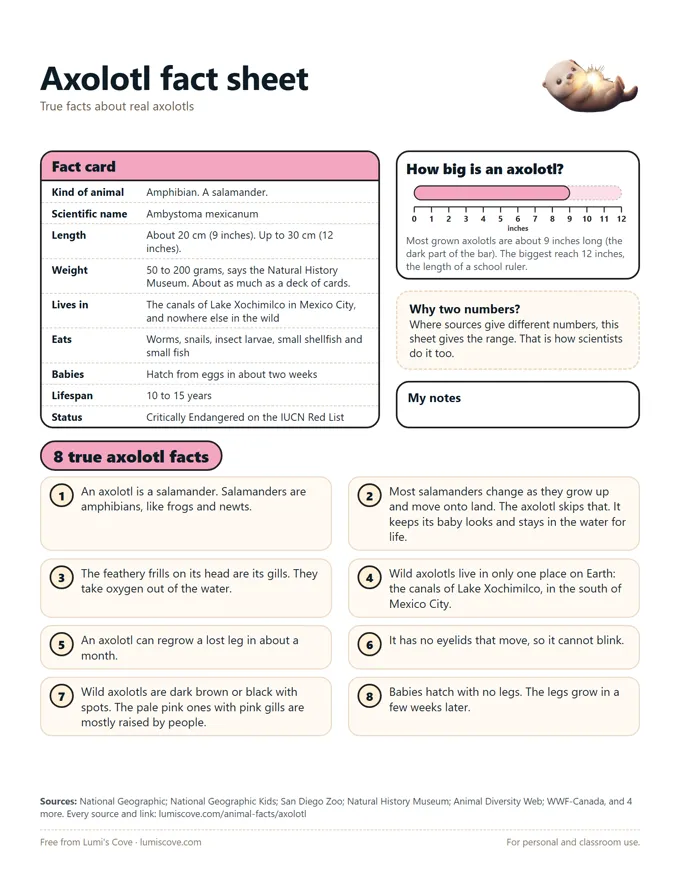
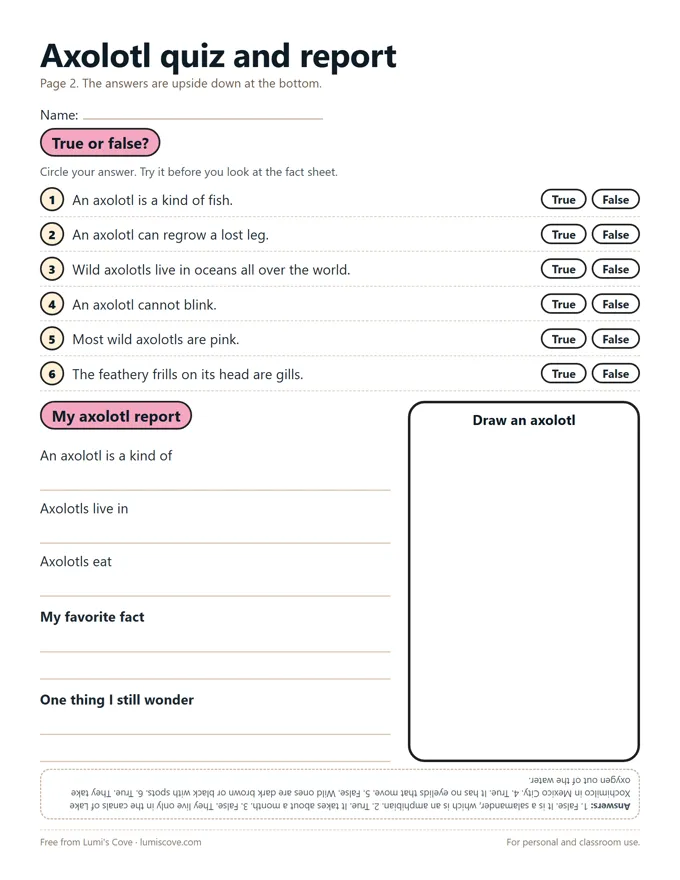
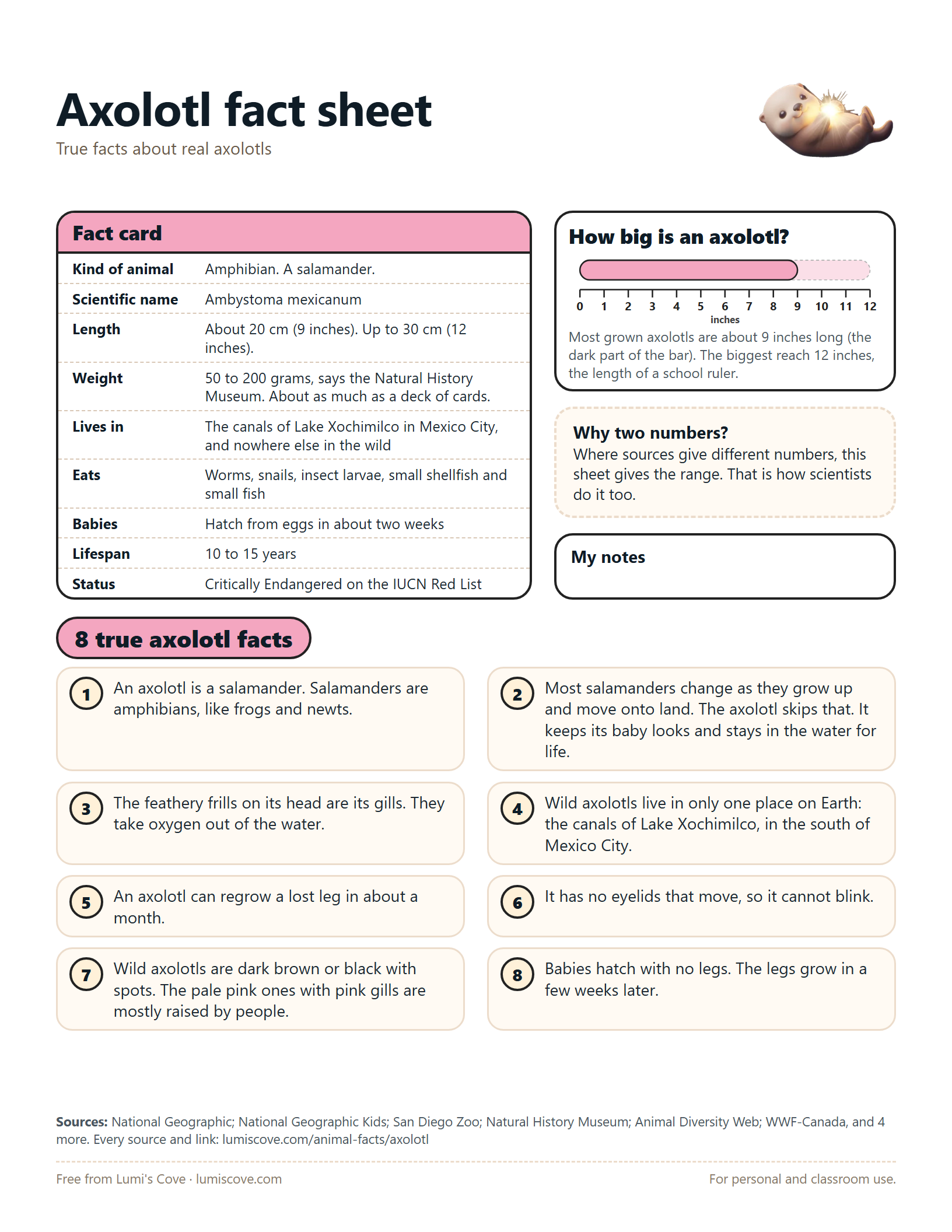
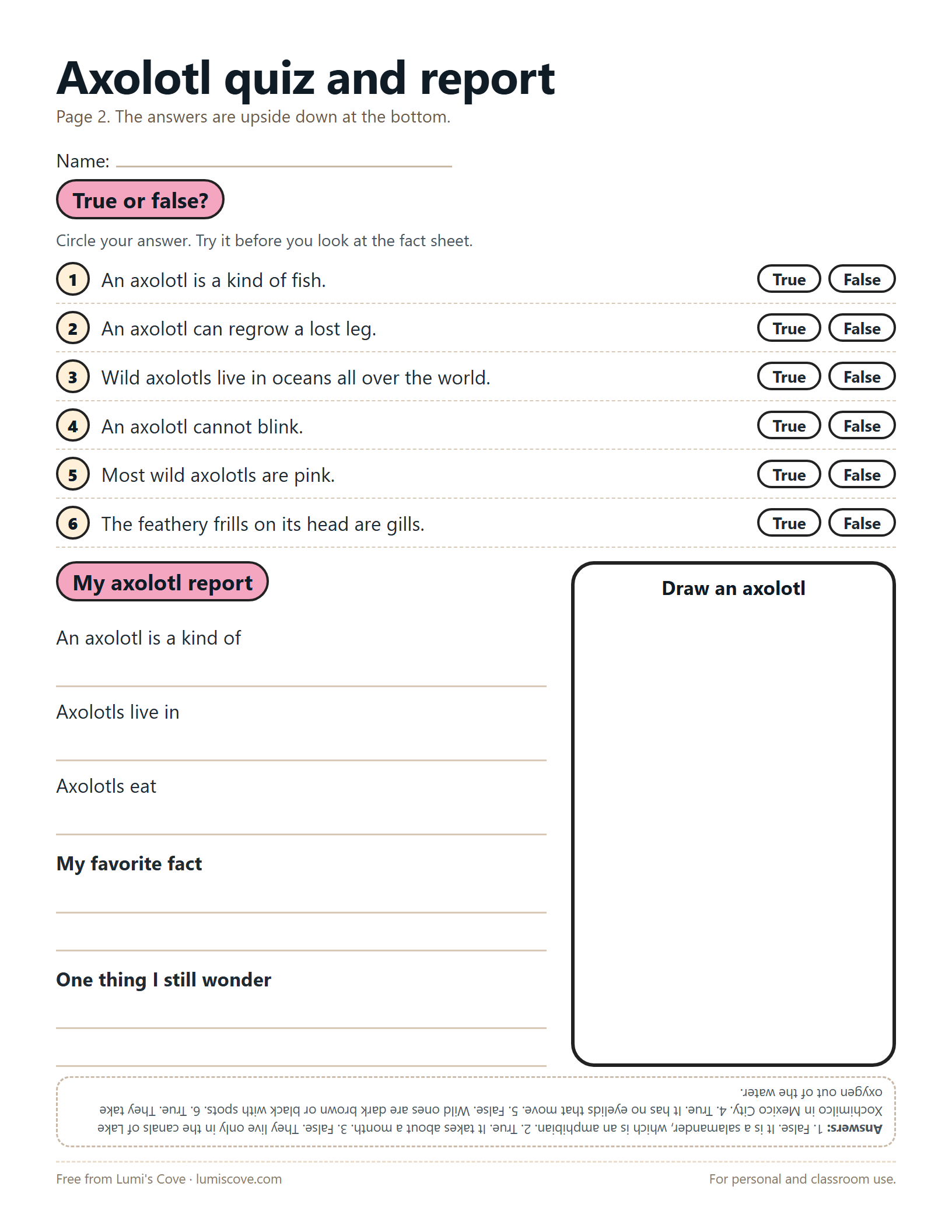
A two-page axolotl fact sheet you can print for a school report, a homeschool unit or just for fun. Page 1 has a fact card, a ruler that shows how big an axolotl is, and eight true facts. Page 2 has a true-or-false quiz, three sentences to finish and a box to draw in. Every fact comes from the sources listed on our axolotl facts page.
Download and print
Two US Letter pages: the fact sheet, then the quiz and report page. Print one or both, in color or black and white.
Save to Pinterest so you can find it again.
For parents: no ads, no chat, no accounts, nothing to buy. Kids never type anything here. Our note for parents
How to use it
- Print page 1 and read it together, or let your child read it alone.
- Print page 2. Circle True or False for each line without peeking at page 1.
- Check the answers. They are printed upside down at the bottom of page 2.
- Finish the three sentences, write down a favorite fact and draw an axolotl in the box.
Tips
- The axolotl is a good pick for a report on amphibians, life cycles or endangered animals.
- For a longer report, ask one more question of your own and look for the answer on the full facts page.
- Teachers: the sheet names its sources (National Geographic, National Geographic Kids, San Diego Zoo and others), and the facts page links to every one.
Try the quiz right here
The same six questions are on page 2 of the PDF. Guess first, then tap a question to see the answer.
1 True or false? An axolotl is a kind of fish.
False. It is a salamander, which is an amphibian.
2 True or false? An axolotl can regrow a lost leg.
True. It takes about a month.
3 True or false? Wild axolotls live in oceans all over the world.
False. They live only in the canals of Lake Xochimilco in Mexico City.
4 True or false? An axolotl cannot blink.
True. It has no eyelids that move.
5 True or false? Most wild axolotls are pink.
False. Wild ones are dark brown or black with spots.
6 True or false? The feathery frills on its head are gills.
True. They take oxygen out of the water.
The eight facts on the sheet
- An axolotl is a salamander. Salamanders are amphibians, like frogs and newts.
- Most salamanders change as they grow up and move onto land. The axolotl skips that. It keeps its baby looks and stays in the water for life.
- The feathery frills on its head are its gills. They take oxygen out of the water.
- Wild axolotls live in only one place on Earth: the canals of Lake Xochimilco, in the south of Mexico City.
- An axolotl can regrow a lost leg in about a month.
- It has no eyelids that move, so it cannot blink.
- Wild axolotls are dark brown or black with spots. The pale pink ones with pink gills are mostly raised by people.
- Babies hatch with no legs. The legs grow in a few weeks later.
Want more? The axolotl facts page has all 15 facts, the longer story and a link to every source.
Questions
Where do the axolotl facts come from?
From National Geographic, National Geographic Kids, San Diego Zoo, Natural History Museum and other zoos, universities and wildlife groups. We read each page ourselves. The full list, with links, is on the axolotl facts page.
What grade is this fact sheet for?
About second to fifth grade. Younger kids can do it with a grown-up reading aloud, and older kids can use it as notes for a longer report.
Are axolotls fish?
No. They live in water and have gills, but they are amphibians, in the same group as frogs and newts. They have four legs with toes.
How big do axolotls get?
Most are about 20 cm (9 inches) long. The biggest reach 30 cm (12 inches).
Can I print copies for my class?
Yes. It is free for home, homeschool, classroom and church group use. Please do not sell it.
Read all the axolotl factsSee every animal
More like this
 Animal fact sheets
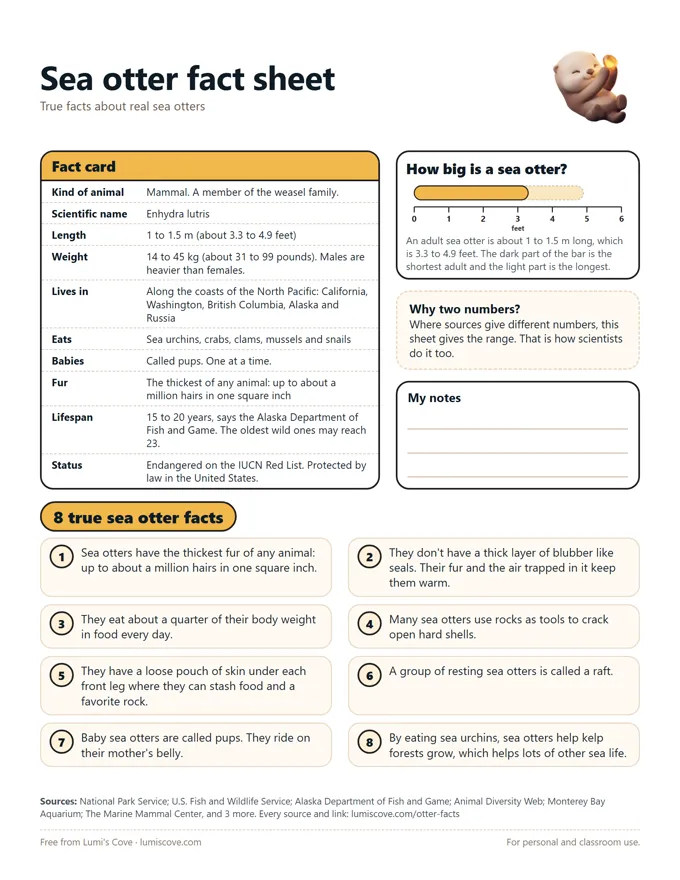
Sea otter fact sheet (free printable)
A fact card, a size ruler and eight true sea otter facts, plus a quiz and report page.
 Animal fact sheets
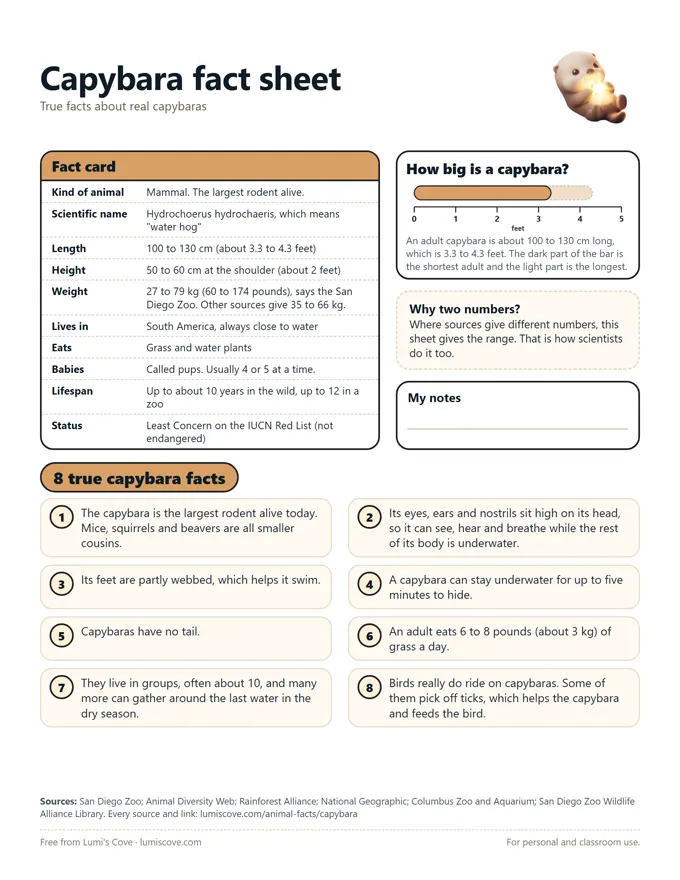
Capybara fact sheet (free printable)
A fact card, a size ruler and eight true capybara facts, plus a quiz and report page.
 Animal fact sheets
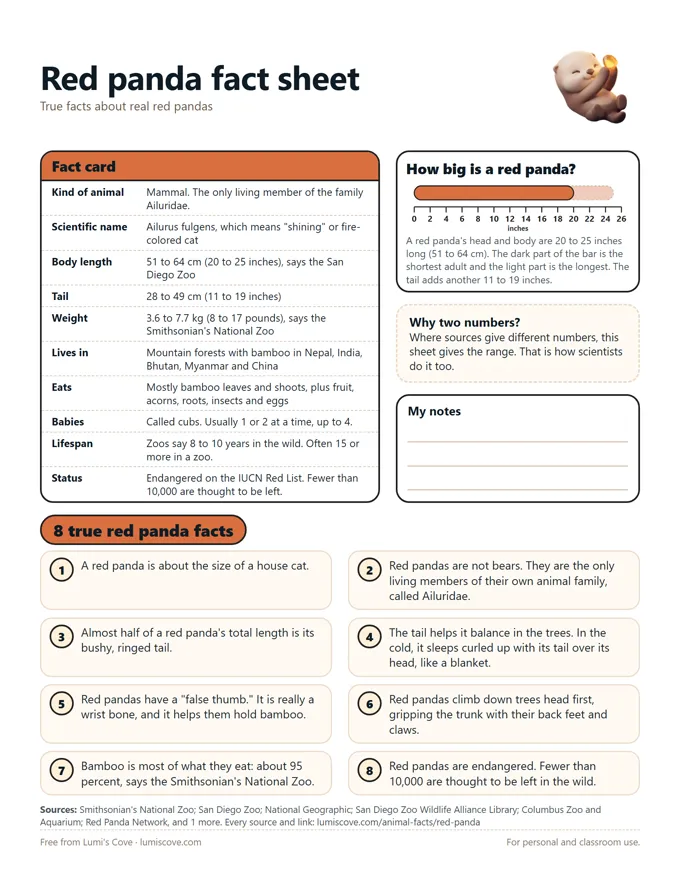
Red panda fact sheet (free printable)
A fact card, a size ruler and eight true red panda facts, plus a quiz and report page.
Get a letter from the cove
One cozy email a week: a new wallpaper or printable, news from Glimmer Cove, and the day each Lumi app comes out. Leave any time.