

Sea otter fact sheet (free printable)
A two-page sea otter fact sheet you can print for a school report, a homeschool unit or just for fun. Page 1 has a fact card, a ruler that shows how big a sea otter is, and eight true facts. Page 2 has a true-or-false quiz, three sentences to finish and a box to draw in. Every fact comes from the sources listed on our sea otter facts page.
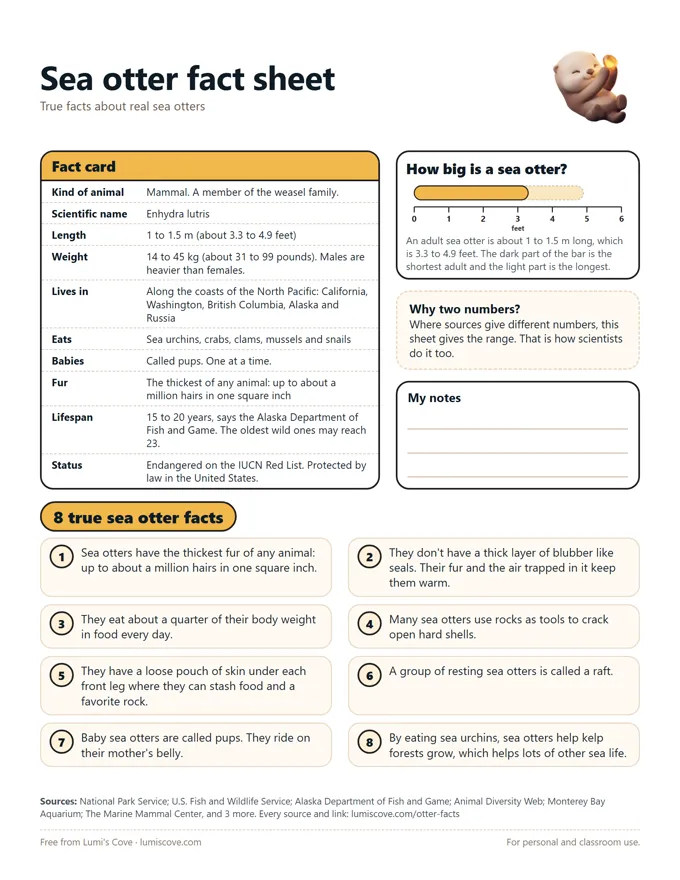
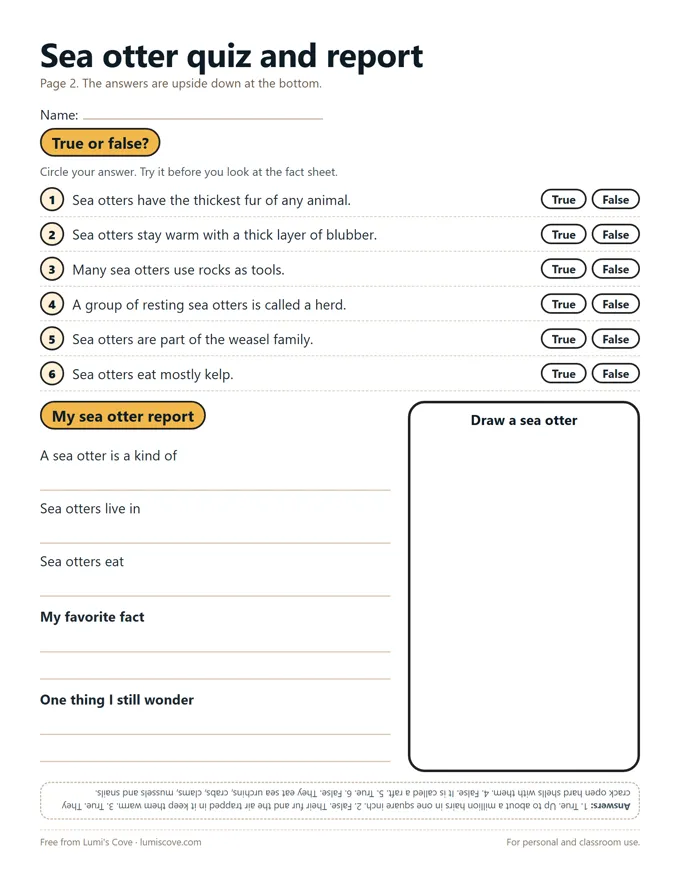
Download and print
Two US Letter pages: the fact sheet, then the quiz and report page. Print one or both, in color or black and white.
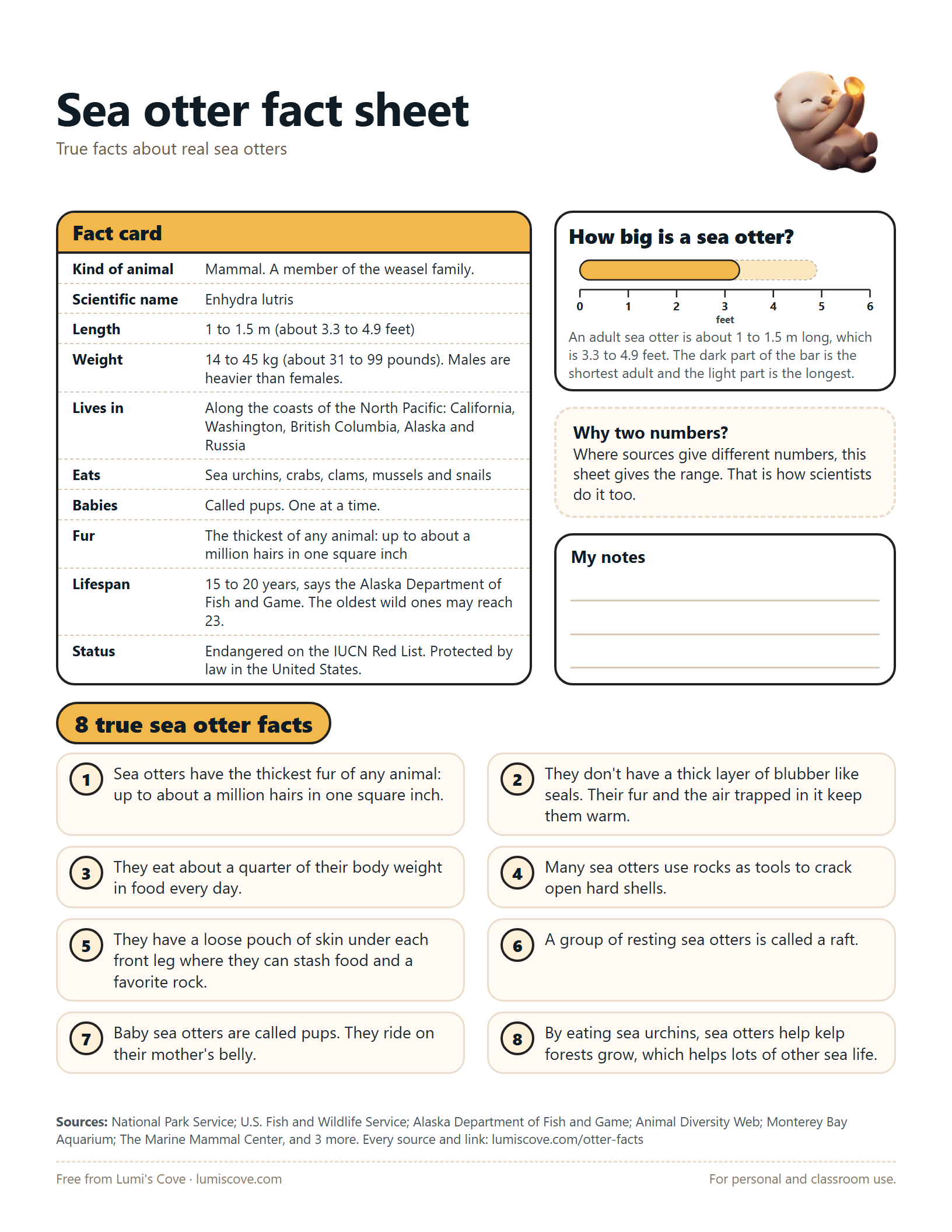
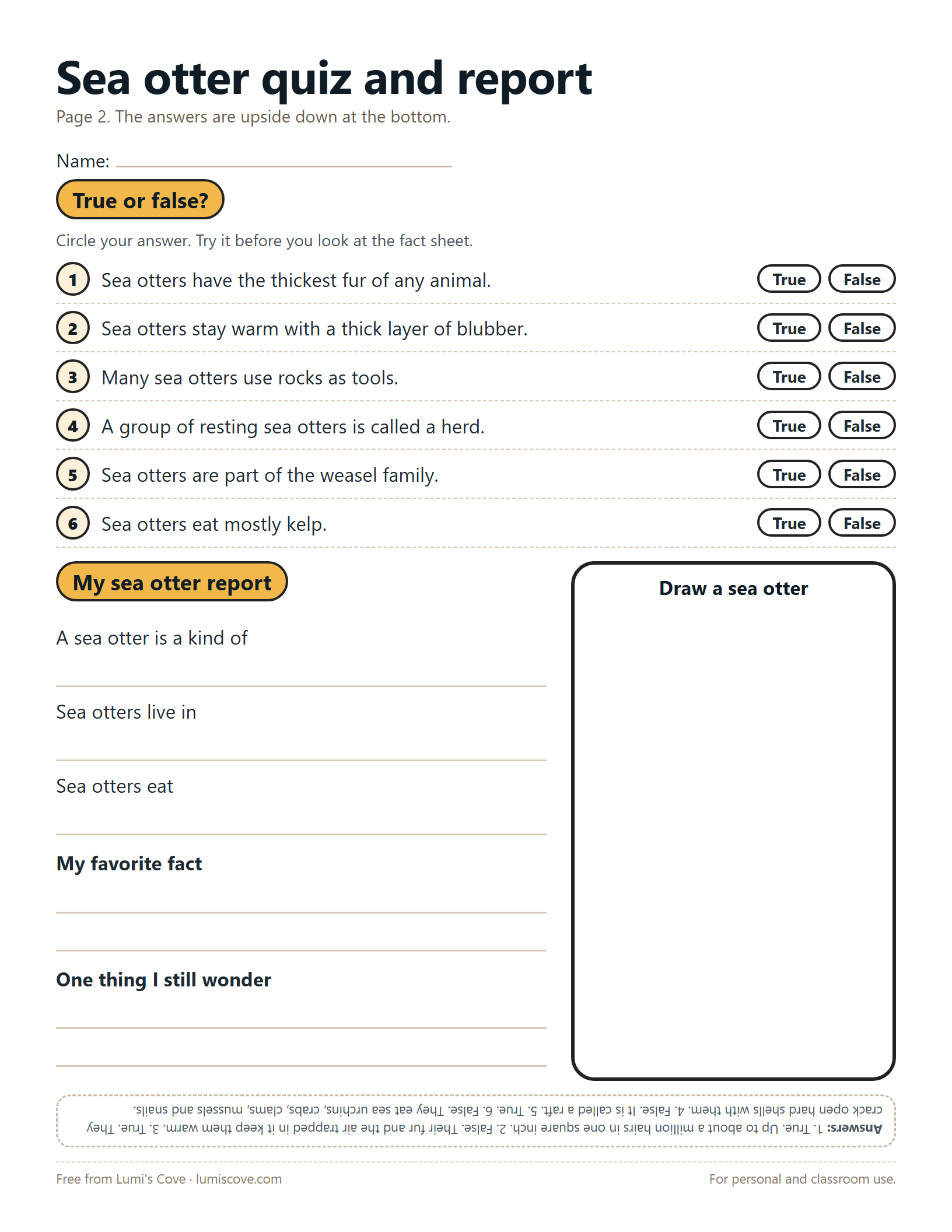
Save to Pinterest so you can find it again.
For parents: no ads, no chat, no accounts, nothing to buy. Kids never type anything here. Our note for parents
How to use it
- Print page 1 and read it together, or let your child read it alone.
- Print page 2. Circle True or False for each line without peeking at page 1.
- Check the answers. They are printed upside down at the bottom of page 2.
- Finish the three sentences, write down a favorite fact and draw a sea otter in the box.
Tips
- The sea otter is a good pick for a report on ocean animals, kelp forests or animals that use tools.
- For a longer report, ask one more question of your own and look for the answer on the full facts page.
- Teachers: the sheet names its sources (National Park Service, U.S. Fish and Wildlife Service, Alaska Department of Fish and Game and others), and the facts page links to every one.
Try the quiz right here
The same six questions are on page 2 of the PDF. Guess first, then tap a question to see the answer.
1 True or false? Sea otters have the thickest fur of any animal.
True. Up to about a million hairs in one square inch.
2 True or false? Sea otters stay warm with a thick layer of blubber.
False. Their fur and the air trapped in it keep them warm.
3 True or false? Many sea otters use rocks as tools.
True. They crack open hard shells with them.
4 True or false? A group of resting sea otters is called a herd.
False. It is called a raft.
5 True or false? Sea otters are part of the weasel family.
True.
6 True or false? Sea otters eat mostly kelp.
False. They eat sea urchins, crabs, clams, mussels and snails.
The eight facts on the sheet
- Sea otters have the thickest fur of any animal: up to about a million hairs in one square inch.
- They don't have a thick layer of blubber like seals. Their fur and the air trapped in it keep them warm.
- They eat about a quarter of their body weight in food every day.
- Many sea otters use rocks as tools to crack open hard shells.
- They have a loose pouch of skin under each front leg where they can stash food and a favorite rock.
- A group of resting sea otters is called a raft.
- Baby sea otters are called pups. They ride on their mother's belly.
- By eating sea urchins, sea otters help kelp forests grow, which helps lots of other sea life.
Want more? The sea otter facts page has all 15 facts, the fact card and a link to every source.
Questions
Where do the sea otter facts come from?
From National Park Service, U.S. Fish and Wildlife Service, Alaska Department of Fish and Game, Animal Diversity Web and other zoos, universities and wildlife groups. We read each page ourselves. The full list, with links, is on the sea otter facts page.
What grade is this fact sheet for?
About second to fifth grade. Younger kids can do it with a grown-up reading aloud, and older kids can use it as notes for a longer report.
Are sea otters endangered?
Yes. The IUCN Red List lists the sea otter as Endangered. In the United States, sea otters are protected by law, and the southern sea otter of California has been listed as threatened since 1977. About 3,000 live along the California coast.
How big is a sea otter?
An adult is about 1 to 1.5 m long (3.3 to 4.9 feet) and weighs 14 to 45 kg (31 to 99 pounds), says the Animal Diversity Web at the University of Michigan. Males are bigger than females, and the sea otters of Alaska are bigger than the ones in California.
Can I print copies for my class?
Yes. It is free for home, homeschool, classroom and church group use. Please do not sell it.
Read all the sea otter factsSee every animal
More like this
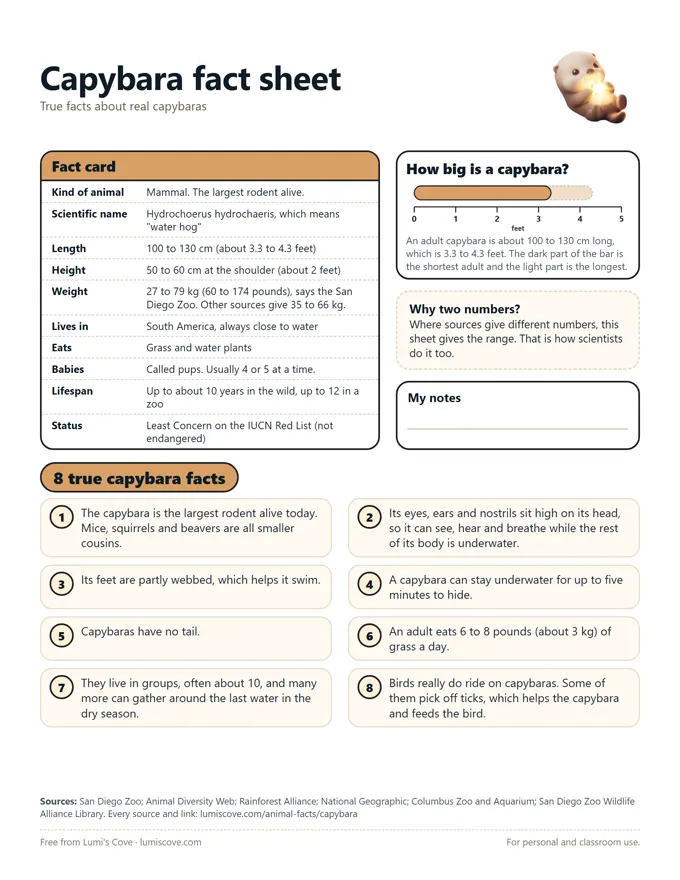 Animal fact sheets
Capybara fact sheet (free printable)
A fact card, a size ruler and eight true capybara facts, plus a quiz and report page.
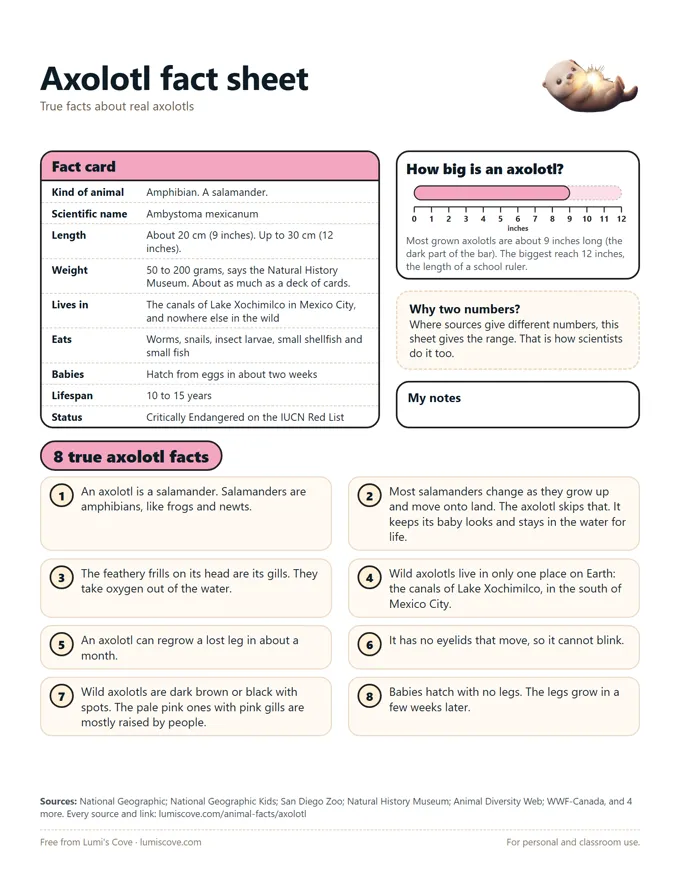 Animal fact sheets
Axolotl fact sheet (free printable)
A fact card, a size ruler and eight true axolotl facts, plus a quiz and report page.
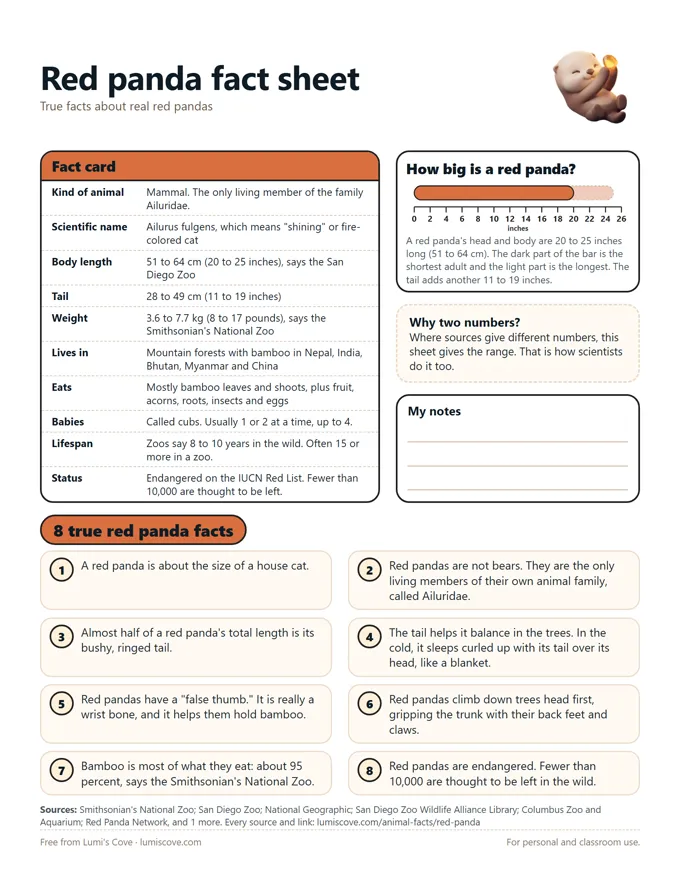 Animal fact sheets
Red panda fact sheet (free printable)
A fact card, a size ruler and eight true red panda facts, plus a quiz and report page.
Get a letter from the cove
One cozy email a week: a new wallpaper or printable, news from Glimmer Cove, and the day each Lumi app comes out. Leave any time.