

Animal report template (free printable)
A one-page animal report template that works for any animal. There is a fact card to fill in, a box for a drawing, room for three true facts and something most templates leave out: a place to write where you found your facts. It fits second to fifth grade, and it is a good first step before a longer written report.
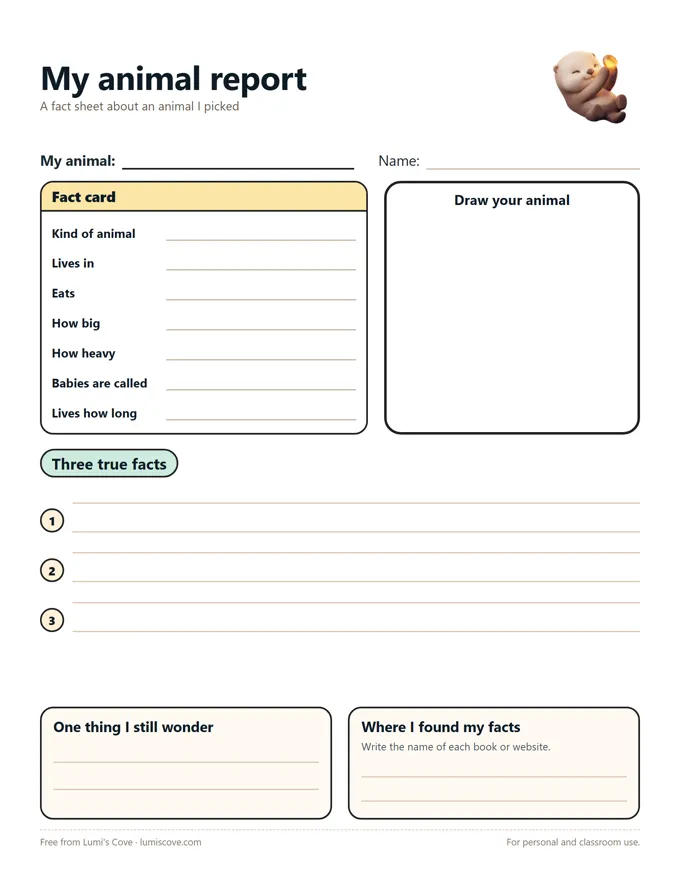
Download and print
One US Letter page. Prints well in color or black and white.
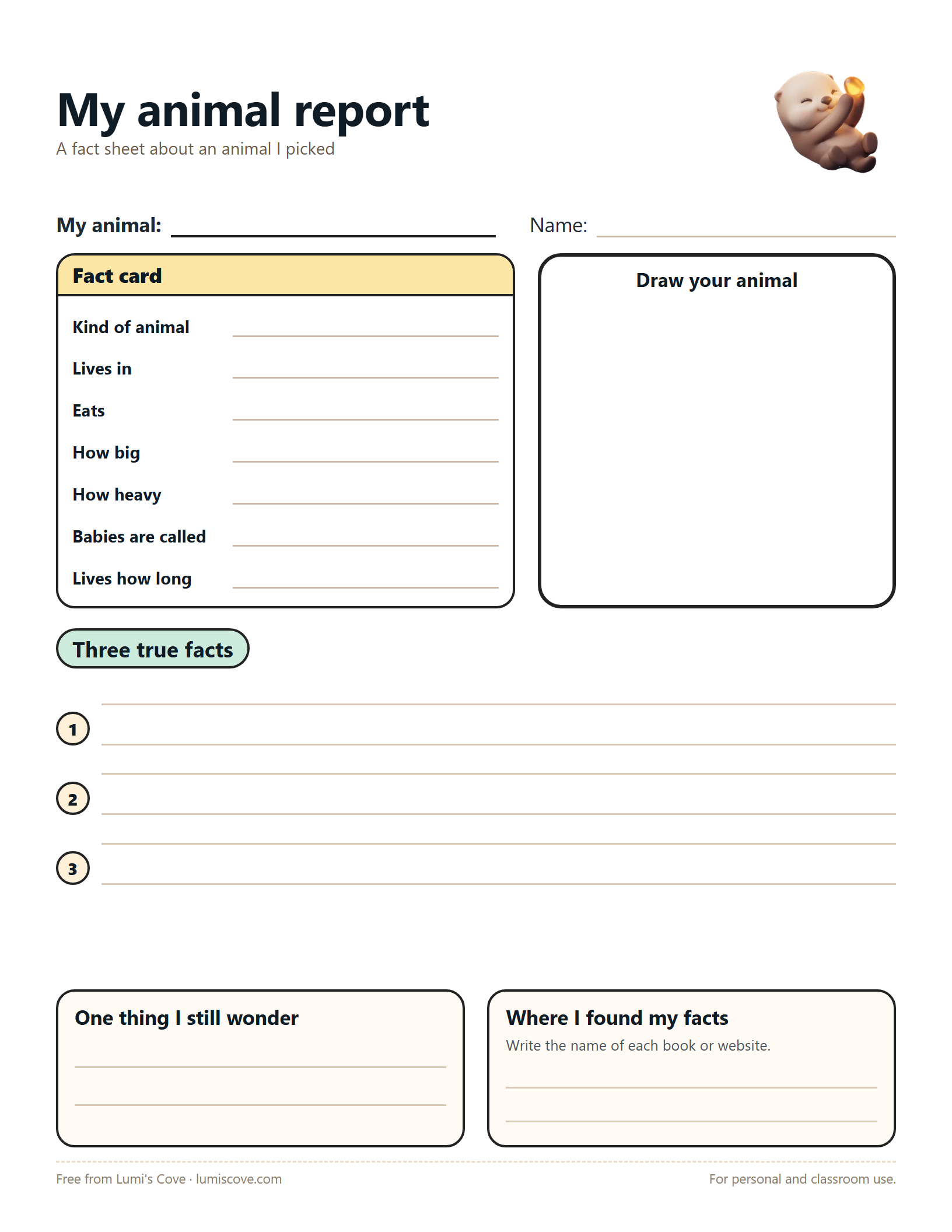
Save to Pinterest so you can find it again.
For parents: no ads, no chat, no accounts, nothing to buy. Kids never type anything here. Our note for parents
How to use it
- Pick your animal and write its name at the top.
- Read about it in two places, such as a library book and a zoo or museum website.
- Fill in the fact card: what kind of animal it is, where it lives, what it eats, how big it is and what its babies are called.
- Write three true facts in your own words, then draw your animal.
- In the last box, write the name of each book or website you used.
Tips
- If two books give different numbers, write both. Real scientists do that too. For example, "60 to 174 pounds".
- Zoos, aquariums, museums, universities and wildlife agencies are good places to look. A page with no name on it is not.
- Doing a capybara, axolotl, red panda, puffin, raccoon or sea otter? Our fact pages list their sources, so you can start there.
Need facts for your report?
These pages give the short answer first and list every source at the bottom. Each one also has its own filled-in fact sheet and quiz.
- Capybara facts and the capybara fact sheet
- Axolotl facts and the axolotl fact sheet
- Red panda facts and the red panda fact sheet
- Puffin facts and the puffin fact sheet
- Raccoon facts and the raccoon fact sheet
- Sea otter facts and the sea otter fact sheet
Questions
What grade is this animal report template for?
About second to fifth grade. First graders can do it with help, and sixth graders can use it as a notes page before they write a full report.
What goes in an animal report?
The basics are what kind of animal it is, where it lives, what it eats, how big it gets, its babies and a few interesting facts. A good report also says where the facts came from.
Why is there a box for sources?
So a reader can check your facts. Writing down the book or website is a habit that teachers ask for in every grade after this one.
Can I print copies for my class?
Yes. It is free for home, homeschool, classroom and church group use. Please do not sell it.
More like this
 Animal fact sheets
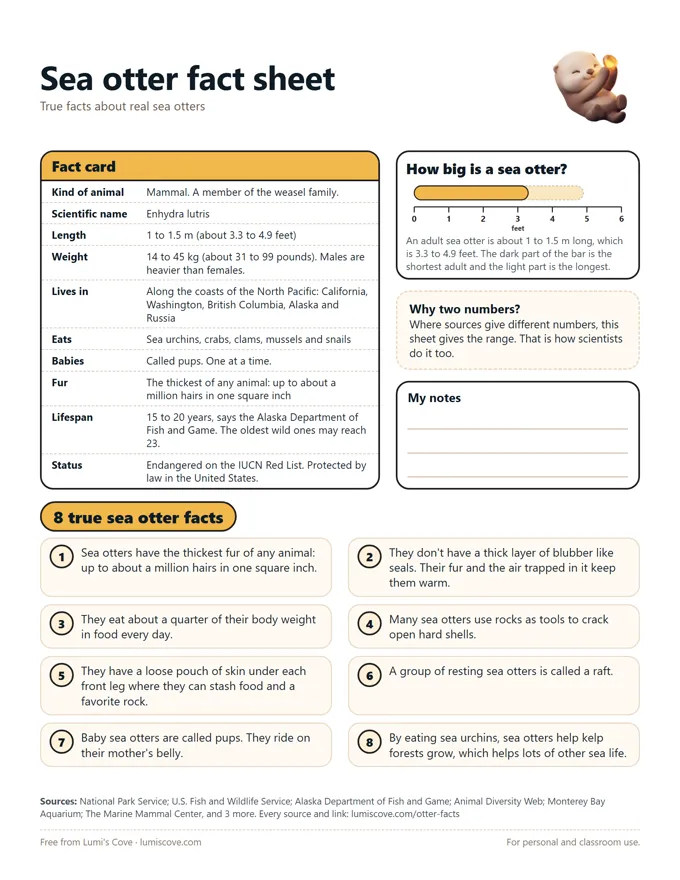
Sea otter fact sheet (free printable)
A fact card, a size ruler and eight true sea otter facts, plus a quiz and report page.
 Animal fact sheets
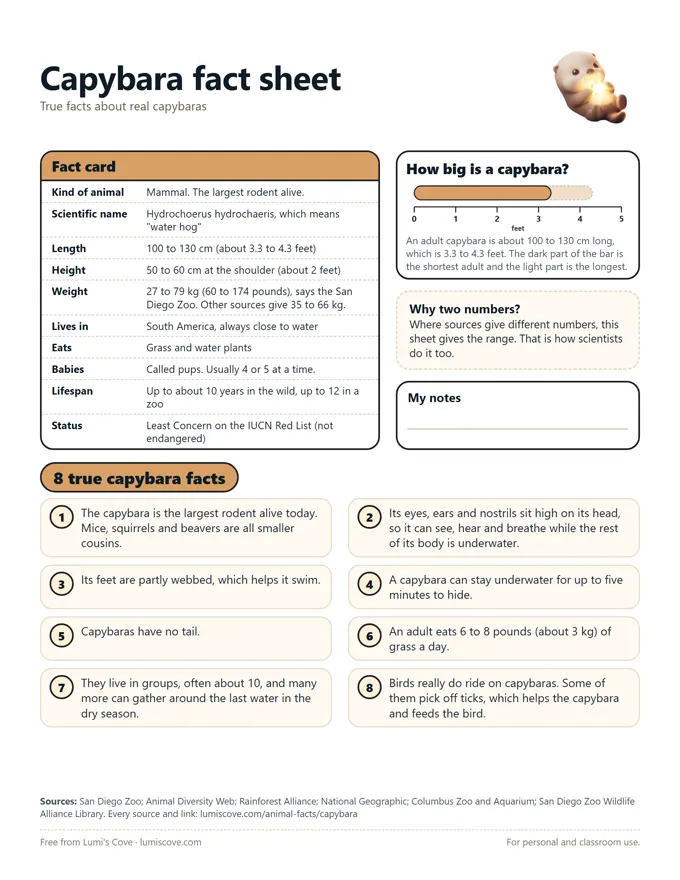
Capybara fact sheet (free printable)
A fact card, a size ruler and eight true capybara facts, plus a quiz and report page.
 Animal fact sheets
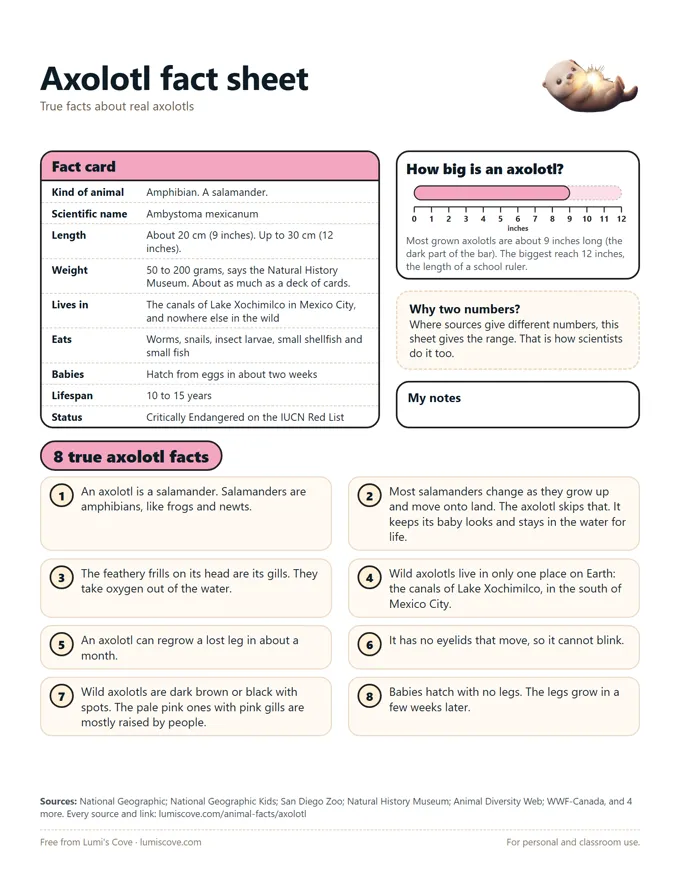
Axolotl fact sheet (free printable)
A fact card, a size ruler and eight true axolotl facts, plus a quiz and report page.
Get a letter from the cove
One cozy email a week: a new wallpaper or printable, news from Glimmer Cove, and the day each Lumi app comes out. Leave any time.